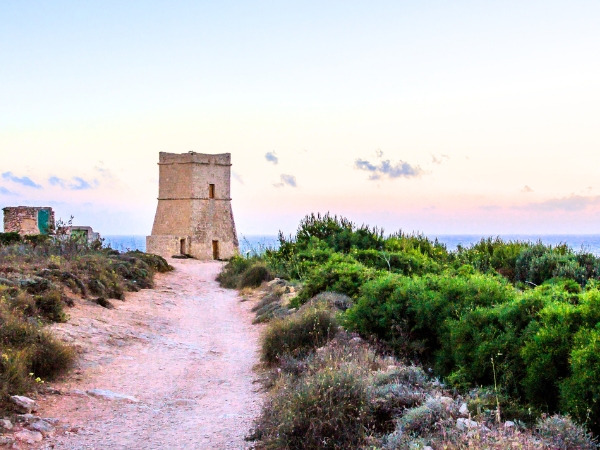
Malta is an archipelago defined by its golden limestone, turquoise waters, and a history that spans millennia. While the island's bus network is extensive, any seasoned traveller will tell you that to truly capture the essence of the Maltese islands, you need the autonomy of four wheels. Whether you are chasing the sunrise at the Dingli Cliffs or seeking out a secluded cove in Gozo that no tour bus can reach, a rental car is your key to the country.
The independence provided by a car allows you to bypass the crowded hubs of Sliema and St. Julian’s to find the Silent City of Mdina at dusk or the Neolithic temples of Ħaġar Qim before the midday heat. This guide explores the ten most critical factors you must consider when you decide to rent a car in Malta, ensuring your Mediterranean road trip is as seamless as the horizon.
Before you can get behind the wheel and start your adventure, you must ensure you meet the requirements for renting and driving a car. While the legal age to drive in Malta is 18, the rental industry follows its own set of rules. Most agencies will only provide a car rental in Malta to individuals aged 21 and over.
Furthermore, drivers between the ages of 21 and 24 are usually subject to a Young Driver Surcharge, an additional daily fee that covers the higher insurance risk. It is also important to note that many companies have an upper age limit, often set at 70 or 75. Drivers in this bracket may be asked to provide a medical certificate or purchase additional insurance.
If you hold a driving licence issued by an EU member state, it is sufficient, and you won’t need any additional documents. If you are from a non-EU country, a licence in English or Latin script is also usually recognised. However, if your domestic licence is in a non-Roman script, an International Driving Permit (IDP) is mandatory.
The rental agreement is a legal contract that dictates your liability and rights. In Malta, it is common for the initial quote to look cheap, but the devil is in the details. You should carefully check for hidden fees, such as late-night pick-up charges if your flight lands after 11:00 PM, or cleaning fees if you return the car with excessive sand from a day at Golden Bay.
Another specific clause to look for is the one-way fee. While the island is small, some companies charge extra if you pick up the car at the airport but wish to drop it off at a different location. Additionally, ensure you understand the Controlled Vehicle Access (CVA) system in Valletta. Most agencies will bill you later for any time spent within the capital's restricted zones, often adding an administrative fee on top of the government charge.
Insurance is perhaps the most confusing aspect of the car rental process in Malta. By law, all rentals should include Third-Party Liability (TPL). Most packages also come with a Collision Damage Waiver (CDW), but this usually carries a significant excess, the amount you are liable to pay if the car is damaged, ranging from €700 to €1,500.
To reduce the excess amount to zero, many travellers choose to upgrade to a Super CDW or a Full Damage Waiver (FDW). It is also vital to remember that standard CDW policies rarely cover vulnerable parts of the car, such as the tyres, the windscreen, or the undercarriage. If you plan on driving on more rugged tracks, these add-ons are highly recommended.
Malta is one of the few places in Europe where you drive on the left-hand side of the road, a legacy of its time under British rule. If you are coming from a right-hand drive country, the first hour of your journey will require intense concentration, particularly at roundabouts, where traffic flows clockwise.
The country implements strict policies regarding road safety. Speed limits are generally 30 km/h in residential areas and 80 km/h on the fastest arterial roads. There is a zero-tolerance policy toward mobile phone use. Drivers must not touch their device while driving, unless it is integrated into a hands-free system. Enforcement is digital and efficient, with hidden cameras, meaning fines will often reach your rental agency before you have returned home.
The road network in Malta is a tale of two halves. Major arterial routes have seen massive development over the last few years, resulting in smooth, multi-lane highways. However, once you turn to the traditional villages or coastal routes, the roads become narrow, winding, and often framed by ancient dry-stone walls.
The Maltese driving method is often described as assertive. Expect local drivers to move quickly through roundabouts and for indicators to be used more as a suggestion than a rule. In the winter months, be wary of flash flooding. Because of the island's topography and limestone base, heavy rain can lead to significant water accumulation in low-lying areas. Always maintain a safe following distance and be prepared for sudden stops.

The time of year you visit will dictate your experience with car rental in Malta. During the peak summer months of July and August, the island reaches near-maximum capacity. During this window, car availability plummets and prices skyrocket. If you are planning a summer holiday, booking your vehicle at least eight to twelve weeks in advance is essential.
Conversely, the shoulder seasons, April to June and September to October, offer the perfect balance of warm weather and lower rental rates. In the winter, you can often find incredible bargains, sometimes for less than €10 a day. However, regardless of the season, always ensure your car has a high-quality air conditioning system, as even in the cooler months, the Mediterranean sun through a windscreen can be intense.
When planning your daily itinerary, consider your parking strategy. In historical hubs like Valletta, Sliema, and the Three Cities, parking is notoriously difficult and often expensive. Use your car to reach the outskirts of these cities, then utilise Park and Ride facilities or local transport to enter the pedestrianised centres. This saves you both money and the frustration of circling narrow blocks for an hour.
Another thing to consider is a visit to Gozo. Most rental companies allow their cars on the ferry, but it is not guaranteed. It is always worth confirming this in your contract before boarding the ferry. The Gozo Channel Ferry operates 24/7, and you do not need to book your car onto it in advance. You drive onto the ferry in Malta and only pay the fare upon your return from Gozo to the main island.
In Malta, a compact car is the gold standard. They are easier to park, more fuel-efficient, and much simpler to manoeuvre through tight corners. Bigger is rarely better. While it might be tempting to rent a large SUV for a family of five, navigating the 400-year-old streets of Zebbug or Victoria in a wide vehicle can be a nightmare.
Regarding transmission, manual cars are the default and are significantly cheaper. If you require an automatic car, you must specify this at the time of booking and expect to pay a premium. There is also an increasing number of electric vehicles (EVs) available for rent. Malta has significantly expanded its charging network, making an EV a viable and eco-friendly option for small-island commuting.
The most convenient place to pick up a car is at Malta International Airport, where most major international brands and several local agencies have desks. This allows you to start your vacation immediately. However, if you only need a car for a few days of your trip, consider renting from a local depot in areas like St. Paul’s Bay or Qawra, which can sometimes be cheaper and avoid airport surcharges.
The best strategy to apply is booking weeks or months ahead. Waiting until you arrive at the airport desk can be a costly mistake, particularly during the high season. Advanced booking helps you secure the specific vehicle you need and get early bird discounts. Furthermore, it gives you time to review all terms and insurance options, rather than making snap decisions.
In the event of a breakdown or an accident, you must know the local protocol. The universal emergency number in Malta is 112. If you are involved in a traffic accident, you must not move the vehicle until a traffic warden or a police officer arrives, especially if there is a dispute or a third party involved. Moving the car can invalidate your insurance claim.
Ensure that the 24/7 roadside assistance number provided by your rental agency is saved in your phone. Most reputable companies give excellent support and will swap your vehicle if a mechanical fault occurs. Always take photos of the car’s condition during pick-up and drop-off to ensure you have a visual record in case of any later disputes.

Choosing to rent a car in Malta is a decision that transforms your simple vacation into a tailored exploration of Mediterranean history and culture. From the silent, torch-lit streets of Mdina to the rugged, salt-sprayed coastlines of Gozo, the archipelago is waiting to be discovered.
While the country’s challenging landscape can be intimidating at first, from driving on the left to the assertive local traffic, the rewards far outweigh the initial learning curve. By selecting the right vehicle, considering your insurance options, and booking well in advance of the summer rush, you set yourself up for a stress-free experience.
Armed with the knowledge from this guide and a sense of adventure, you are ready to take the wheel. Do not leave your itinerary to the whims of a bus schedule; instead, take the freedom of the open road. Book your car rental in Malta today and experience the islands exactly as they were meant to be seen.