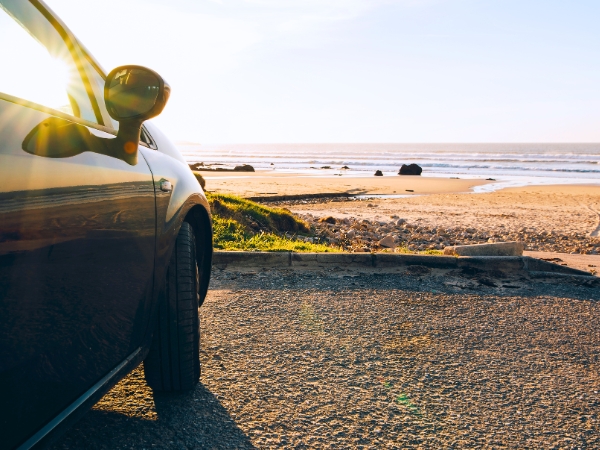
Malta has solidified itself as a premier Mediterranean destination, and exploring it by car is an experience that blends the convenience of modern infrastructure with the allure of ancient wonders. While the country’s public transport system is reliable, the true magic of Malta lies in its hidden corners, many of which remain difficult to access without your own vehicle.
Driving in Malta allows you to dictate your own pace, skipping the rigid schedules of tour buses and finding the freedom to linger at a seaside café or a prehistoric ruin just as the sun begins to set. By choosing to drive, you gain an all-access pass to the archipelago's most enchanting sights, from the bustling markets of the south to the sun-drenched hills of Gozo.
2026 is a particularly auspicious time to visit. The country has recently introduced a series of sustainable transport initiatives, making it easier than ever to rent electric or hybrid vehicles. Furthermore, several cultural heritage sites have undergone extensive restoration, and new boutique accommodations in the rural north and south provide the perfect base.
To kick-start your driving adventure in Malta, we listed the top seven places that you should visit with a rental car. These destinations have their own unique charms, and each can suit a different type of traveller.
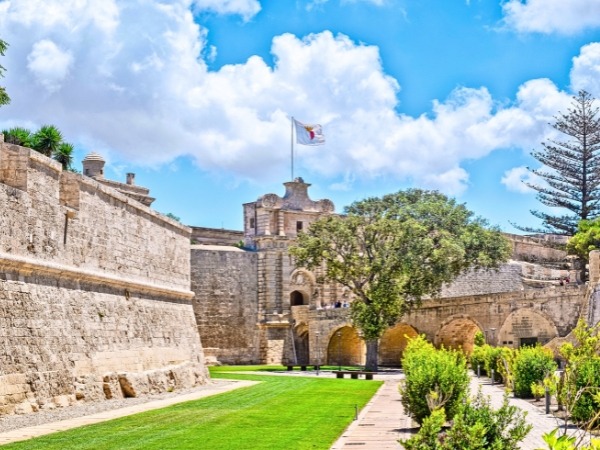
Mdina and Rabat are the essential starting points for any Maltese road trip. Mdina, the ancient capital of Malta, is a fortified medieval gem perched on a central hill. Known as the Silent City, it is a labyrinth of narrow limestone streets, Baroque palaces, and quiet piazzas. Key highlights include St. Paul’s Cathedral, a masterpiece of architecture, and the Bastion Viewpoint, which offers a panoramic sweep across the entire island.
Just outside the city gates lies Rabat, where the atmosphere shifts to a lively local hub. Here, you can descend into the St. Paul’s Catacombs, an extensive underground necropolis dating back to Punic and Roman times, or visit the Domvs Romana to see exceptionally preserved Roman mosaics.
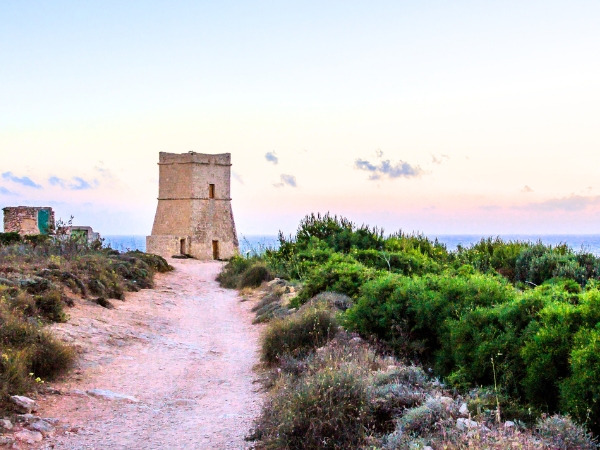
Located on Malta’s western coast, just a stone’s throw away from Rabat, the Dingli Cliffs mark the highest point of the islands at 253 metres above sea level. It is arguably one of the top places in Malta for those who appreciate natural grandeur. This site is less about bustling attractions and more about the majesty of nature.
Visitors often follow the Triq Panoramika for a scenic walk along the cliff edge, passing the tiny St. Mary Magdalene Chapel, which has stood on the precipice since the 15th century. From these heights, you can spot the uninhabited islet of Filfla on the horizon. It is a premier location for photography and peaceful sunset viewing, where the sky meets the Mediterranean in a dramatic display of colour.
Heading towards the southern coast, you will reach Marsaxlokk, Malta's most famous fishing village. It is celebrated for the colourful Luzzu boats that bob in its harbour, each adorned with the Eye of Horus for protection at sea. The village is also home to a vibrant market, which peaks on Sundays with an array of fresh seafood, local honey, and traditional lace.
A short distance away is St. Peter’s Pool, a natural limestone swimming bowl carved into the Delimara Peninsula. The crystal-clear, deep turquoise waters are a favourite for adventurous swimmers and cliff-jumpers, while the surrounding flat rocks provide a unique terrain for sunbathing and exploring fossils embedded in the stone.
For history enthusiasts, the archaeological park of Ħaġar Qim and Mnajdra is a mandatory stop. These megalithic temples are UNESCO World Heritage sites that date back to 3600 BC, making them older than the Pyramids of Giza. They are situated in a relatively isolated part of the southern coast, overlooking the islet of Filfla.
Ħaġar Qim features massive trilithon entrances and complex interior chambers, while the nearby Mnajdra is famous for its astronomical alignment. During the equinoxes, the rising sun illuminates the main altar with mathematical precision. The visitor centre provides an immersive 4D introduction, and the 500-metre coastal path connecting the two sites offers stunning views of the rugged southern coastline.
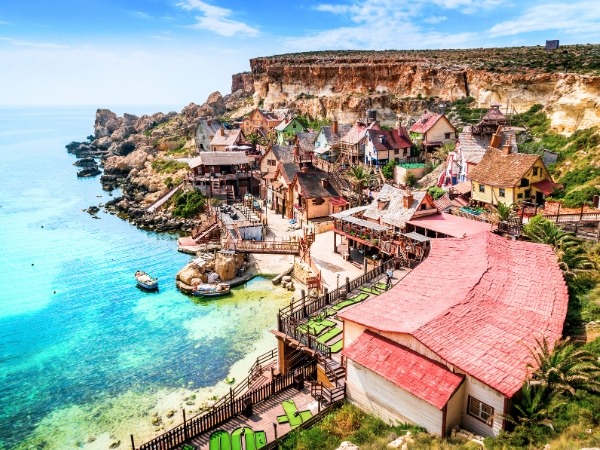
In the northern part of the island, Popeye Village offers a quirky, nostalgic diversion. Originally built as the film set for the 1980 musical Popeye, the village has become one of the top places in Malta for families and photographers. You can explore the rustic wooden buildings, watch live performances by characters like Olive Oyl and Bluto, or visit the cinema to see a documentary about the set's construction.
While the attraction itself is popular, driving allows you to stop at the various viewpoints along the cliffs of Anchor Bay, which offer a stunning panoramic perspective of the film set. The bay itself is a popular spot for scuba diving and snorkelling, featuring an underwater cave and clear waters that contrast beautifully with the colourful village backdrop.
Għajn Tuffieħa, often overshadowed by its busier neighbour Golden Bay, is perhaps the most beautiful beach on the main island. Often called Riviera Beach, it remains more rugged and less developed than nearby beaches, making it the perfect spot for those seeking a wilder seaside experience and the island's best sunset vistas.
Accessible by a long flight of 187 stone stairs, the beach is characterised by its unique reddish-orange sand and dramatic clay slopes. Activities here focus on the outdoors. You can hike the trails up to the Għajn Tuffieħa Tower for views of three different bays, or surf when the Mediterranean swells pick up.
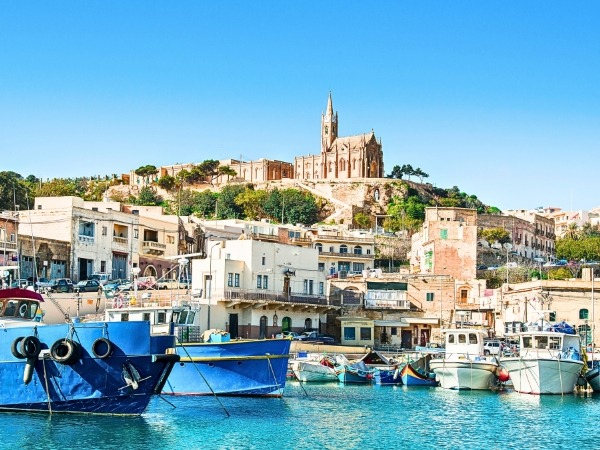
No Maltese road trip is complete without a journey to the island of Gozo. The Gozo Channel Ferry is a seamless operation that allows you to drive your vehicle directly onto the ship at Cirkewwa for approximately €15.70. Once on the sister island, the car becomes indispensable for visiting sites.
The primary landmark is the Citadella in Victoria, a massive hilltop fortress with 360-degree views and a rich history. Nature lovers should head to Dwejra Bay, home to the Blue Hole and the Inland Sea, where a natural tunnel through the cliffs leads to the open ocean. Other must-see spots include the neo-romantic Ta’ Pinu Basilica, a site of national pilgrimage, and the ancient Ggantija Temples, which predate the Great Pyramids.
Driving in Malta in 2026 provides you with an unparalleled opportunity to discover the Mediterranean's most historic archipelago on your own terms. By choosing to explore the top places in Malta with a rental car, you transition from being a mere spectator to an active explorer.
The freedom afforded by a vehicle allows you to see the true face of Malta, the one that exists beyond the postcards and the busy hotel districts. You can watch the sunrise at the Dingli Cliffs, enjoy a quiet lunch in a Gozitan village, and finish your day with a swim at a secluded bay, all without the constraints of public transport schedules or organised tours.
To ensure you have the best selection of vehicles and the most competitive rates for the upcoming peak season, we encourage you to book your transport in advance. Secure your freedom and begin your journey by renting a car in Malta today. The open road is waiting to show you the very best of the Maltese islands.