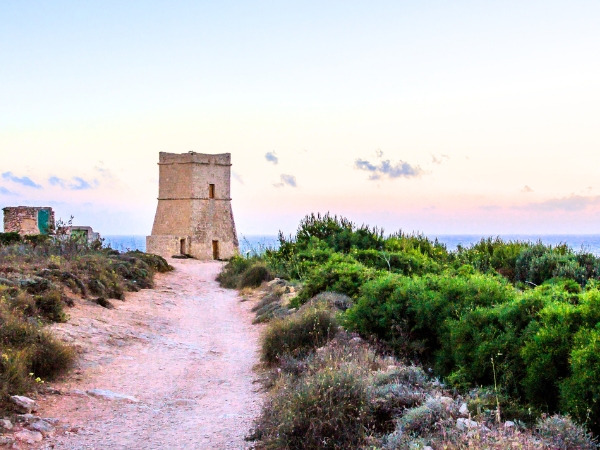
Renting a car in Malta provides tourists with the freedom to explore hidden coves, hilltop towns, and historical sites at their own pace. Driving through the Maltese archipelago offers access to an unparalleled blend of Mediterranean charm, dramatic coastal views, and centuries of rich history.
However, for international drivers, taking the wheel in Malta can feel intimidating at first. The islands feature a distinct driving ecosystem characterised by left-hand traffic, narrow historic streets, and bustling urban routes connecting picturesque coastal villages. To navigate these roads smoothly, you need to understand the local driving rules, infrastructure, and signage.
Your ability to read and interpret road signs in Malta directly impacts your journey, ensuring your personal safety and protecting the pedestrians, cyclists and other people you share these streets with. It also prevents you from committing traffic and parking violations and helps you avoid receiving hefty fines and penalties.
This guide provides you with everything you need to know about road signs in Malta, from their core design categories to their unique traits and basic local terminology. By studying these signs, you will be ready to hit the Maltese roads with confidence and focus on your target destinations across the archipelago.

Road signs in Malta closely align with standard European conventions. This framework ensures that most visual cues rely on universally recognisable shapes, geometric borders, and distinct colour codes. By categorising signs into specific designs, authorities ensure that drivers can instantly identify instructions even from a distance or in low visibility conditions.
Mandatory signs inform drivers of specific actions they are legally obligated to perform. In Malta, they are defined by a circular design with a bright blue background and white symbols or directional arrows. These signs instruct drivers on lane positioning, movement directions, and vehicle obligations. Common examples include turn indicators, such as Turn Left Ahead or Keep Right around traffic islands, as well as indications for minimum speed limits and roundabout navigation. Ignoring a mandatory sign is a violation of Maltese traffic regulations and will not only lead to penalties, but can also compromise safety.
Prohibitory signs establish explicit restrictions on driver behaviour to prevent hazards and control traffic flow. These signs are circular and feature a white background enclosed within a prominent red border, accompanied by black pictograms. In certain instances, a diagonal red line cuts across the symbol to emphasise the prohibition. Essential examples across Malta include No Entry signs, No Overtaking warnings, maximum speed limit indicators, and restrictions against turning left or right at specific intersections. These signs also govern local parking rules, clearly marking zones where stopping or parking is strictly forbidden.
Directional signs provide crucial navigational guidance, helping drivers identify current locations, select correct highway lanes, and locate towns or historic sites. These rectangular signs employ a colour-coded scheme to categorise routes. Bypasses and arterial roads utilise green backgrounds with clear white lettering, while regional routes feature blue backgrounds. Local village destinations, residential streets, and historic landmarks are frequently indicated using white or yellow rectangular boards with clear black lettering. These signs are strategically placed ahead of major junctions, bypass exits, and ferry terminals connecting Malta to its sister island of Gozo.
Warning signs alert drivers to potential hazards, upcoming road changes, or unsafe terrain conditions requiring immediate caution and speed adjustment. Characterised by an equilateral triangle pointing upwards with a white interior and a bold red border, these signs utilise black icons to describe the nature of the upcoming risk. You will frequently encounter these signs across Malta indicating steep incline hills, narrow roads, sharp bends, humps or physical speed reducers, and pedestrian zebra crossings. Spotting a warning sign should prompt you to immediately decrease your speed and stay alert.
Priority signs establish the right of way at intersections, narrow streets, and complex junctions where conflicting traffic paths meet. Because right-of-way rules are vital on tight island roads, these signs feature unique geometric shapes to ensure instant identification from all angles. The standard STOP sign is an octagonal red sign with white lettering, requiring a complete vehicle halt. The Give Way sign is an inverted red and white triangle requiring drivers to yield to oncoming traffic. Additionally, priority roads are marked by a yellow diamond contained within a white border, indicating to drivers that they hold precedence over incoming side-street traffic.

While Malta shares many standard European signs, its deeply blended heritage has created distinctive signage traits tailored to the local road culture.
While directional signs across main routes often incorporate English descriptions, local street signage and village boards rely heavily on traditional Maltese orthography. Navigating the islands requires familiarity with local place names, which feature distinct Semitic-influenced language structures and unique letters.
Understanding local letter combinations is vital. For instance, the silent combination Għ or the dotted letters Ħ and Ż alter word visual recognition. Identifying these indigenous spellings on road signs in Malta helps you make swift navigation decisions without second-guessing your route.
Despite following the British convention of driving on the left-hand side of the road, Malta operates entirely on the metric system for all traffic measurement indications. Foreign visitors arriving from countries that use imperial units must remain mindful of this combination.
Speed limit signs display values strictly in kilometres per hour, requiring drivers to keep within limits typically set at 50 km/h in urban sectors and up to 80 km/h along open bypasses and regional expressways. Furthermore, physical limitations on road signs in Malta, such as bridge clearance heights, vehicle width limits, and weight restrictions across older bridges, are indicated exclusively in meters and metric tonnes.
The majority of road signs in Malta incorporate standard pictographs and operate bilingually using English and Maltese text. However, localised instruction plates, municipal parking notices, and temporary roadwork warnings usually feature essential Maltese terms. Familiarising yourself with basic terminology ensures you read supplementary road signs accurately. These words include:
Triq: Translates directly to street or road and appears before street names across every locality.
Ċedi: Instructs drivers to yield or give way at incoming junctions.
Dħul: Signifies entrance or vehicular entry point into a facility, tunnel, or courtyard.
Ħruġ: Indicates a road exit or building egress point.
Tnaqqas: Directs drivers to slow down, often placed ahead of village centres or school zones.
Attenzjoni: Translates to attention or caution, appearing at the top of warning signs.
Żona Residenti: Marks restricted residential parking areas reserved for locals.

What language are Maltese road signs written in? Signage across the islands is typically bilingual and relies on standard European pictograms. However, directional signs mostly use local Maltese place names, while supplementary text plates often use simple Maltese terminology.
What does speed limit signage look like in Malta? Speed limit signs in Malta are circular with a white background and a red border displaying numerical values in kilometres per hour (km/h). Urban areas generally feature 50 km/h indicators, while open roads and bypasses display limits of up to 80 km/h.
How are parking restrictions presented on signs? Parking restrictions are indicated by rectangular informational signs paired with painted yellow road markings. These signs specify resident-only zones, maximum permitted parking durations, or times when you must display a parking clock disc on your dashboard.
What is the design of warning road signs across Malta? Warning signs in Malta are equilateral triangles featuring a red outer border and a white background. They use black pictograms to alert drivers to upcoming hazards, such as sharp bends, steep gradients, pedestrian crossings, or physical speed humps.
What do blue circular road signs instruct drivers to do? Blue circular signs are mandatory signs that dictate specific actions drivers are legally obligated to follow. They typically feature white arrows indicating required turns or dictating the direction of travel around roundabouts.
How do priority road signs work across Maltese roads? Priority signs use distinct geometric shapes, such as octagonal red STOP signs and inverted triangular GIVE WAY signs, to clarify right-of-way rules. Unless signs indicate otherwise, drivers approaching a junction or roundabout must yield to traffic coming from their right.
Understanding the core categories of road signs in Malta will help you navigate historic village centres and complex junctions with ease. By respecting the local speed limits, staying mindful of left-hand driving, and recognising localised Maltese place names, you can guarantee a smooth journey across the archipelago.
Driving across Malta and Gozo is an engaging and highly rewarding way to explore. Behind the wheel, you have the ultimate freedom to reach ancient temples, secluded beaches, and picturesque cliffside viewpoints that are typically inaccessible by public transport. Ready to discover the unique gems of this Mediterranean paradise? Book your rental car today and experience everything Malta has to offer on your terms.